Sunday, 17 May 2015

Fountains of Ash

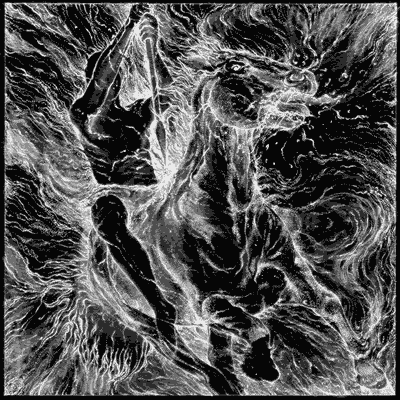
Band: Malthusian
Release: 'Below the Hengiform' EP (2015)

It is hard not to overstate the importance of this release for Irish metal. Next to the decades of hard work put in by stalwarts Primordial and the feverish dabblings of black metal entities Slidhr, Myrkr and Rebirth of Nefast, Malthusian now occupy the role of Ireland's answer to internationally recognised acts such as Mitochondrion and Antediluvian.

Malthusian's molasses-like concoction of black, death and doom metal is accomplished and developed beyond the band's years. As Ireland has yet to see the usual crop of Beherit and Blasphemy worshippers that proceed something as evolved and tight as Malthusian's output, this EP is a brilliant and very welcome enigma in terms of a scene's musical growth.

On 'Below the Hengiform' attention is initially drawn to the competency of drummer JK, who also lends his talents to Irish death/grind veterans Abaddon Incarnate and recently reunited post-black metal success story Altar of Plagues. Alongside sundry rhythmic patterns, serpentine guitar work and innovative vocal stylings add variety and layering to the consistently enthralling happenings. At points, chant-like throat-singing, performed by vocalist/bassist PG (also of Irish doom/death outfit Mourning Beloveth) adds a definite sense of the supernatural.

Within the release's three offerings, there exists moments of genuinely chilling magic; nods to Morbid Angel's often overlooked opus, 'Formulas Fatal to the Flesh', are audible in the stop/start makeup of some sections, while the closing moments of "Slouching Equinox" are nothing short of death/doom mastery. Here is technicality in abundance, but void of the usual lethargy that can frequently curse such material. This quartet haven't sacrificed the wall of sound, the brickwork is simply more skilled.

In essence, 'Below...' owes its satisfying bearing to varied pacing, assured musicianship and optimal production values, all of which demonstrate the band's allegiance to their chosen genres, as well as a level of professionalism and prowess that enables Malthusian to nestle next to the aforementioned big names with ease.

Akin to all landmark releases, this one terminates all too soon. Often questioned on the movement toward the eventual presentation of a full-length, the band are in no rush, instead preferring to ensure that not a superfluous moment makes the final cut by refining their output via releases such as this.

Having shared stages with notables like Dead Congregation, Dødsengel and Altar of Plagues, to name but an illustrious few, Malthusian are a testament to passion and perseverance, and the current idols of Ireland's burgeoning metal underground.

Rating: 90%

Sunday, 12 April 2015

The Gospel of the Slit Throat

Band: Devouring Star
Release: 'Through Lung and Heart' (2015)

It is difficult to consider comparisons to heavyweights Deathspell Omega as a disservice to any hardworking black metal band or act. For many, they represent black metal's artistic zenith, musically, lyrically and aesthetically.

The band's current sonic direction, heard only as seedlings on 'Si Monumentum...' and more recently fully abloom on 'Paracletus', has been described as everything from jazz black metal to bearing more similarities to the likes of The Dillinger Escape Plan than anything ever wildly imagined by Darkthrone. Yet, despite those apparent non-sequiturs within the rigid, serious world of black metal, they are considered untouchable and invariably wholly seminal.

Finland's Devouring Star revealed themselves in 2014, brandishing a rancorous two-track, self-titled demo. Arresting, developed and ambitious, it caught a lot of warranted attention and it took no time at all for the Deathspell Omega comparisons to lazily fill headlines and column space. While the similarities and nods were audible, Devouring Star avoided all of the flattery utilised by Dutch outfit Dodecahedron, for example. In short, Devouring Star, as a contemporary black metal band, couldn't help but be influenced by Deathspell Omega, but their Finnish charm shone through the Francophilic tendencies of their peers.

While 'Through Lung and Heart' opens with yet more Deathspell Omega acknowledgement, displaying 'Kénôse'-like plodding drums beneath discordant, jarring riffing, as well as some of those The Dillinger Escape Plan-style bass-heavy, intricate, slow section breakdowns, Devouring Star manage to incorporate every aspect of this into an all-engulfing, organic sound that is very much their own. It is warm, rich and pulsating, and not a mere carbon copy.

Niceties aside, this is a merciless black metal record, with very little in the way of respite to be found track to track, no matter the music's pace. Interestingly, the band's steadfast pummelling drumming and dissonant riffing, while entirely competent and listenable, often gives way to inspired slow to mid pace sections that shed light on excellently crafted melodies, particularly in "To Traverse the Black Flame". Added to this, an unhurried section heard within the second track, "Decayed Son of Earth", is reminiscent of slower portions found on Funeral Mist's excellent 'Maranatha'.

As an entire offering and debut full-length, fortified by visuals/layout from Comaworx and Brianvdp, as well as eloquent lyrical oblations, 'Through Lung and Heart' is fantastically strong and truly haunting in many respects. While its vocals may be considered par for the course and are definitely one of the weaker aspects of this album, the rest of the musicianship is focused, suitably abrasive and memorable, unlike so much of their counterparts' output. Among a slew of post-Deathspell Omega acts, Devouring Star have set themselves apart with apparent ease. Watch this one make Best of 2015 lists later in the year.

Rating: 85%

Tuesday, 3 March 2015

Black Ice

Band: Misþyrming
Release: 'Söngvar elds og óreiðu' (2015)

Emerging from a scene consistently active far longer than most of the on-trend webzines and ten a penny, hip writers would have you believe, Misþyrming are another Icelandic troupe riding the crests of the mercilessly biting waves that have been battering the barren shores of the underground the last while.

The slightest whiff of this particular strain of Nordic gloom sees completist black metal devotees scrambling over limited-run releases and coloured vinyl peddled by zealous labels who, complete with the requisite loftiness, must surely believe all their birthdays have come at once.

On top of this, there has even been some mention that the scene's would-be godfathers, Svartidauði and Sinmara, peaked far too early, missing out on the cool factor that now wafts about Icelandic black metal. Overall, though, none of this conjecture seems to have detracted from the fact that those bands' respective full-lengths remain this particular coven's benchmark releases to date.

However, Misþyrming's 'Söngvar elds og óreiðu' is no mere addition to the Icelandic sound, wielding as it does a character-rich throb that grants its own identity, peppered with apt nods to the aforementioned scene seniors. While the record opens with a typically pummelling, abrasive onslaught that does encourage chatter about Svartidaudi similarities, Misþyrming's sound is rather less crisp; just audible amid the murk, some intelligent riffing is disappointingly lost. Whether or not this was intentional remains a mystery.

Though the record's earliest offerings labour tirelessly to engage the listener, it isn't until track five, 'Er haustið ber að garði', that Misþyrming appear to truly open up and demonstrate their own adept musicianship. Several tracks' slower sections betray a knowledge of bona fide, bass-heavy groove that works excellently to glue together the more standard proceedings, and while frenzied riffing abounds, subtle ambiances play beneath the nebulosity. Interestingly, it may also be hazarded that there are almost post-punk elements existing in some of the album's mid-tempo segments.

Business is bound together with expectedly competent yet quite standard percussion, which acts more so as buttressing, as opposed to an element with its own presence. Affairs are further underpinned by laudable attempts to conjure the malevolent spirit of Arioch/Mortuus of Funeral Mist/Marduk to aid in the choral department, making for some truly and fittingly possessed emanations from vocalist D.G.

In essence, 'Söngvar elds og óreiðu' is a substantial and layered presentation, many of those layers only revealing themselves after several digestions. Added to this, quirky interludes and a fantastically ominous outro go further yet to prove that the Icelandic cult undoubtedly knows a thing or two about crafting real black metal. This is a record well worth the absorption time.

Rating: 90%

Sunday, 25 January 2015

The Tomb Becomes a Womb

Band: Hetroertzen
Release: 'Ain Soph Aur' (2014)

One of Lamech Records' esteemed roster, Hetroertzen enjoy a certain hermetical aura that many of their contemporaries often fail to invoke. The Chilean ensemble (now located in Sweden) sound akin to a rediscovered 90's Norse black metal mix tape, dust-caked and well worn, but exuding just enough energy to blow most modern, over-embellished black metal out of the water.

Weaving about in the wake left by 2010's 'Exaltation of Wisdom', their 2014 effort - making quite a few Album of the Year lists - retains the mesmerising style of its forbear. Utilising a grandiose atmosphere created by crisper production values that lend real clarity to the instrumentation, while retaining just enough harshness, 'Ain Soph Aur' is a sanguine declaration of Hetroertzen's patent devotion.

Attention is initially drawn to proceedings with the use of clean, operatic style vocals that underpin the band's ritualistic nuances. Complete with their melody-rich, trademark serpentine and arresting riffing, complemented by wholly competent percussion that is reminiscent of the legendary Hellhammer in parts, Hetroertzen boast a special ability to transport the listener back to the aforementioned glory days of their chosen musical genre, and to some of its most hair-raising aural endeavours.

Containing over an hour of material to absorb, twelve tracks interlaced with apt samples and ambient passages, this is one of the few modern records that captures the now overused notion of ritual. Hetroertzen's live exploits are a combination of theatre and musicianship, featuring costume changes and Black Mass activities in between song performances. Amidst a stage adorned with occult practise paraphernalia, this is a band in tune with black metal's indebtedness to spectacle and symbolism.

'Ain Soph Aur' is an ambitious release, adding variations in tempo and vocal style to Hetroertzen's now characteristic sound that was undoubtedly perfected on 'Exaltation of Wisdom'. There is even some genre crossover to be discovered, as the mid-tempo offering, "The Luminous One", is surprisingly evocative of death metal Egyptologists Nile. As expected for this release, the layout, design and artwork supplementing the band's brand of ritual noise is suitably esoteric, appearing and reading like an ancient occult tome.

Despite all efforts, 'Ain Soph Aur' fails to achieve the level of intoxication that made 'Exaltation of Wisdom' so thoroughly pronounced. Even with its improved production, almost cinematic scope and willingness to experiment, it is a subordinate record, but still far superior than most of what is marketed as black metal of late.

Rating: 85%

Thursday, 1 January 2015

The Whisper of the Dead

Band: Dysangelium
Release: 'Thánatos Áskēsis' (2014)

The greatest demos ooze potential and swagger. They are self-assured, forceful declarations of intent - and when attached to relatively new acts, they can be truly unnerving. 

Released in mid-2014, the three-track 'Leviaxxis' pushed through the swathes of also-ran black metal troupes similarly vying for attention. With an approach akin to early Watain, the demo had no issue attracting recognition and building anticipation for Dysangelium's debut full-length, which was due to slither forth on a certain date ripe with implication.

To those attuned, 'Thánatos Áskēsis' may appear as nothing new or terribly fresh, but it is the approach taken by Dysangelium, complemented by a certain amount of grandstand, that levitates this release above the ever-growing Swedish black metal styled masses. Natural, discernible, echoed vocals drip with fervour and devotion. While the lyrical content may not be as developed as that presented by the likes of Deathspell Omega or Dysangelium's compatriots Ascension, it is their delivery, rounded off with arresting artwork and layout by Brianvdp, that lends a veritable sense of credibility to every track.

Mastered at Studio Emissary, a name now synonymous with class acts such as Sinmara and Svartidauði, 'Thánatos Áskēsis' is bolstered by a production that is both organic and cohesive, leaving it thoroughly accessible and never over-polished. A rumbling, dirty bass tone buttresses proceedings, integrating itself excellently within the sharp and frenzied yet melodious riff structures. The aforementioned wanton vocals, mostly a mid-level yet endlessly compelling growl, cement every minute of this release. Though percussion is competent, apt and never lost in the mix, it is quite typical of the genre and lacks any real revelation.

With its content resembling that of Chaos Omen at times, 'Thánatos Áskēsis' is a record wholly generous with its standout offerings. The varied tempos of "Words like Flames" command immersion, as do "Aries" and the spectacularly catchy "Murmura". "Chaomega", a tantalising morsel which also graced the 'Leviaxxis' demo, is an assuredly haunting track, rife with those palpable, growled vocals.

Closing track, "I Am the Witness, I Am the Servant" bursts with ardour. It is a fanatical, consuming barrage that is almost hymn-like in its definitive affirmation of faith and aspiration. Comparable to early Glorior Belli in parts, a little room is conceded to allow for effective slow to mid pace, atmosphere-laden sections before returning to the band's habitual offensive. Overall, as an inaugural full-length 'Thánatos Áskēsis' is an alluring nod to what Dysangelium have in store once their particular strain of diabolism is allowed room to breathe.

Rating: 75%

Sunday, 28 December 2014

We Offer You Our Flesh As a Temple

Band: ASCENSION
Release: 'The Dead of the World' (2014)

'Consolamentum' remains a magnum opus. The 2010 full-length continues to exude prowess and magic, as its track after track concurrence offers one of the most assured and robust black metal releases of the last 10 years. In some ways, within its own little niche of the black metal strata, it is untouchable.

The 'Deathless Light' EP released on All Hallow's Eve of 2014 flaunted the fervently anticipated follow up, 'The Dead of the World', and it left most listeners insatiable, promising as it did a prodigal son, of sorts. The EP's title track stood out easily, with its perfect mixture of tempo, menace and subtly interwoven expert riffing amid the distorted yet controlled flow. All in all, it was genuinely haunting, and would have found itself comfortable on 'Consolamentum'. It instead finds itself a stand out track on 'The Dead of the World'.

The slow- to mid-pace minutes that open 'The Dead of the World' set the timbre and ebb that dominate the record. It initially appears somewhat more introspective, even more mature, than the blasted approach of Ascension's debut full-length, but consequently, it is only when proceedings advance the pace - sounding akin to Funeral Mist in sections - that more of that paramount and intoxicating magic begins to seep outward. Indeed, it is only by the album's third oblation, "Black Ember", that it begins to feel like an Ascension record.

Essentially, the album's slower approach does work well to place greater emphasis on mood and atmosphere, but there exists little of the gooseflesh-rendering proficiency of 'Consolamentum', an album of anthems and shatteringly marvelous black metal. Nonetheless, the song-writing is thoroughly competent, laced with underlying melodies that betray Ascension as professional musicians capable of so much more; a band capable of what their first full-length tendered. However, there is great tenacity to be found in the lyrical themes and in the ardent vocal delivery of such, which veers between similarities to Erik of Watain and the often imitated Arioch/Mortuus of Funeral Mist/Marduk.

Ever important, as a package, the release is deftly bestowed, with aptly dark, obscure and masterful artwork and layout by David Glomba of Teitan Arts and Trident Arts, respectively. The record's cover is adorned with a striking illustration of an insect creature akin to the death's head hawk moth made popular by the Silence of the Lambs. Its decayed appearance, wings marked with sigils, works uncomplicatedly to complement the album's theme and raises it above standard black metal imagery. It is due to this and the inspired, lengthy album closer, "Mortui Mundi", that the full-length is pulled back from the brink.

'The Dead of the World' is peppered with tracks that will go over well in festival settings. Dirge-laden, headbanging numbers may appease an intoxicated crowd but, in many ways, they fall short of being able - or worthy - to nest next to the mystique-rich majesty of the majority of 'Consolamentum'. Bands dabbling in similar concoctions, such as Inferno and Tortorum, ape the likes of Ascension with apparent ease. They may lack that final layer of polish, but following a marginally prosaic release like 'The Dead of the World', Ascension may find their grasp on their particular throne slipping, even if it is ever so slightly.

Rating: 60%

Saturday, 19 January 2013

Seraphs Shat Their Beds

Band: MEDICO PESTE
Release: 'א: Tremendum et Fascinatio' (2012)

This is a tangible illness, a slick disease that coats your fingers and never disappears from under your nails. Medico Peste have insured that naught but misery and desperation waft constantly from 'א: Tremendum et Fascinatio', a release so audacious in its confidence, it is almost impossible to believe it is a debut full-length.

While utilising what has come to be known as the 'French sound', a now quintessentially Gallic form of audio, most recognisable from the likes of Merrimack and Glorior Belli, Medico Peste have injected just the recommended amount of that Eastern European penchant for despondency into the contemporary black metal hum.

Medico Peste present a predominantly mid-paced black metal of dissonant harmonies and plucked, distorted strings supported by immediate, tenacious percussion. 'א: Tremendum et Fascinatio' applies faster sections and blasted interludes that are timely and dauntless, but suffer from repetition. Before monotony sets in, however, proceedings often switch to more upbeat rhythmic patterns that surprise.

The band are sonically similar in ways to Sektemtum and Shining (Swe) in their exhibition of black metal-laced, darkened rock motifs, but these are progressively shattered by smatterings of blast beats and an overriding sense of mental illness. Medico Peste’s material is incredibly tight and the use of martial percussion in parts adds further precision to proceedings.

As well as nods to the aforementioned French practitioners, there exist references to Hell Militia, Rêx Mündi, Blut Aus Nord and even the endlessly impressive Deathspell Omega – especially in the title track.

What becomes clear early is that the real emphasis here is on the creation of an atmosphere, and it is that that Medico Peste conjure effortlessly. It is not long before images of sickness, dust-caked, filth-smeared halls and bandaged, rotting limbs begin to materialise, doubtlessly aided by the excellent lyrics, artwork, and design, all rendered by the band themselves.

An album recorded, mixed and mastered at No Solace studio by the now legendary M of Mgła fame would seemingly already have a lot to offer before even the most brief of listens, but as it happens, it may have been M’s expert touch that added just one layer of polish too much to this offering. At times, the clarity of this recording detracts from the aura and tension that the instruments have worked so hard to construct; it is too much perfume on a first date, perhaps.

As a result, there is a lack of aggression in the instrumentation, overall. It is the vocalist’s gurgled, mid-level growl, often descending to a miserable wail that allows this record to stand out and recommend itself. The vocal performance is unnervingly impassioned and is sprinkled with impressive, clean vocal sections that lend a real seriousness and haunting dedication to Medico Peste’s output.

In essence, 'א: Tremendum et Fascinatio' is a bold and focused introductory statement that Medico Peste can revise and refine for later efforts, most probably with devastating results.